

10 Best Tips for Booking a Boat in Tulum
10 Best Tips for Booking a Boat in Tulum
Boating in the Riviera Maya is one of the standout experiences when visiting Tulum.
With its crystal-clear waters, rich marine life and laid-back coastal vibe, renting a boat is both a practical way to explore and a special treat.
Whether you’re planning a snorkelling trip, a sunset cruise, a party aboard a yacht or simply a relaxing day on the water, getting the details right matters.
Here are the best tips for booking a boat in Tulum – so your outing goes smoothly, safely and memorably.
1. Identify Your Objectives: What Type of Boat Experience Do You Want?
Before you even look at listings, ask yourself: What kind of outing do I want?
Your answer will shape everything from vessel size to itinerary.
- Do you want a relaxing day on the water with a small group, gentle cruising and maybe a swim?
- Are you after snorkelling or marine-life encounters, where you’ll anchor or go shallow?
- Is your aim a luxury yacht charter, with open bar, DJ or catered lunch?
- Or perhaps a party boat or special event (birthday, bachelor/bachelorette, wedding)?
By clarifying your goal you’ll better match the rental to your needs – and avoid paying for features you don’t use.
For example, the company at Tulum Boat Rentals lists all-inclusive packages with food, open bar, snorkel gear and customizable outings.
2. Match Boat Size and Type to Your Group
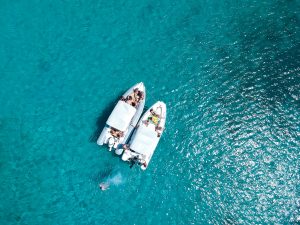
Once you know what you want, the next step is matching the right boat size and type. Some key considerations:
- Group size: Larger groups need larger boats (or multiple smaller ones). Too big a vessel for a small group may feel inefficient and costlier.
- Type of boat: Standard motor‐boat or small yacht for 4-8 people, Larger yacht (40–70 ft) or catamaran for 10-15+ people, Party boat or power yacht with open deck and amenities
- Activities planned: If snorkeling, the vessel needs easy access to water, gear storage and shallow anchorage options. If partying, you may want a deck, shade, sound system, bar.
- Boarding/transport logistics: Where does the boat depart from? If it’s further out, transport time eats into your rental.
3. Choose the Right Itinerary and Inclusions
The itinerary and what’s included matter a lot – and can dramatically affect value. Here are things to check:
- Departure location: Are you boarding in Tulum or needing to travel to a marina / harbour? Time to/from the dock matters.
- Duration: Boat rentals often come in blocks—3 hrs, 4 hrs, 6 hrs, 8 hrs. Be realistic about what you want and how much time you need.
- Stop-overs: Will you stop for snorkeling, swimming, beach access, cenotes or starfish spots? Many boat rentals list such destinations. For instance, one company suggests snorkeling at I’hān Reef, Xpu-Ha Reef or even visiting starfish in Cozumel for longer trips.
- Inclusions: Food & drink/open bar, snorkel gear, inflatables, paddleboards, crew, captain, fuel, port fees, and transportation to/from the marina
- Hidden costs: Marine taxes, extra guest fees, fuel surcharges, tips for crew.
If the listing includes many extras (gear, drinks, food) that’s usually a good value – but confirm what exactly is included and what counts as “extra”.
4. Understand Seasonal Timing and Book Early
Tulum is a popular destination and boats get booked.
Two timing factors matter:
- Seasonality: High season (December to April) will have more demand and higher prices. Rainy season and off-peak (summer, early fall) may have lower prices but check weather.
- Book early: Especially if you have a specific date/time, boat size and itinerary in mind. Smaller/more specialized vessels fill up.
By booking early you get more choices of time, boat size, and often better rates.
5. Verify Safety, Certification and Reputation
Safety should not be overlooked. Here’s what to check:
- Licensed operator: Ensure the company is properly charter-licensed and insured.
- Well-maintained boats: Look for recent photos of the vessel, reviews about condition, statements about maintenance. For example: “Maintained Boats with Permits” is listed by the company.
- Professional crew: Captain and crew should be certified and knowledgeable about the local waterways. The provider mentions “Professional Crew … who know the area.”
- Reviews and testimonials: Read guest reviews. For example, the provided company shows multiple 5-star reviews mentioning attentive crew, great service.
- Emergency plans: Ask the operator what they do in case of weather changes, engine issues, or other emergencies.
6. Budget Wisely – Know What You’re Paying For

Budgeting for a boat rental is more than reading the base price.
Key points:
- Base Price vs Full Cost: The listed price may be base (e.g., “$1499 USD /4 hrs for 8 people + $15 USD per person + marine taxes” – an example from the company).
- Group size affects cost per person: Smaller groups often mean higher cost-per-person because the boat cost is fixed.
- Extras: Food & drink, gear, transport, per-person surcharges, marine taxes, fuel.
- Time of day: Morning vs afternoon vs sunset – often different starting times and rates. Example: “$1499 USD for 4 hrs at 9 am or $1599 USD at 1:30 pm for 15 people” is one listing.
- Hidden fees: Make sure there are no surprise charges on arrival – ask about all applicable taxes, fuel surcharges, extra guest fees.
A smart budget means comparing apples to apples (same hours, same inclusions) and confirming any surcharges.
7. Check Logistics: Boarding Time, Transport, Weather, Cancellation Policy
Sometimes the details make or break your experience. Check the following:
- Boarding time & meeting point: Is the boat departing from Tulum, or do you need to travel to a marina? Factor in transport time. One operator mentions transport to/from has to be considered.
- Start time: Early morning may mean calmer waters; afternoon may lead into sunset. Decide what works for your group (e.g., if kids involved, earlier may be better).
- Weather and water conditions: Ask how cancellations are handled due to weather, sea state or mechanical issues.
- Cancellation or reschedule policy: Ask what happens if you need to cancel, reschedule or change group size. Is deposit refundable?
- What to bring: Even if many items are provided, bring essentials: sunscreen, hat, swimwear, camera, towel, motion‐sickness tablets if you’re prone.
8. Understand Your Route and Destination Highlights
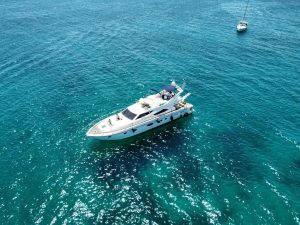
Having a clear idea of where you’ll go helps you make the most of your rental. Some tips:
- Reefs and marine life: In Tulum you’ll find reefs suitable for snorkeling with turtles and tropical fish.
- Cenotes and starfish: Some boat trips include cenotes reachable by boat, or visits further afield to “El Cielo” (starfish area) for longer trips.
- Sunset cruises: The timing of departure is key if you want to see the sunset over the water.
- Beach club stop-over: Some charters include stops at beach clubs or anchored bays where you can disembark, swim or relax.
- Private vs shared trips: If you go private, you’ll likely get more flexibility in route and stops. Shared boat trips may have set itineraries.
Clarify with the operator: which stops, how much time at each, how much “cruising time” vs “swim time”.
9. Tailor the Experience to Your Group (and Their Needs)
Every group is different: families, couples, friends celebrating, corporate outings. Tailor your booking accordingly:
- Families with kids: Choose a boat with safety rails, shaded areas and a shorter itinerary. Confirm snorkel gear fits kids.
- Couples / romantic outing: Consider a more private charter, quieter areas, sunset timing, maybe a catered meal.
- Friend groups / parties: Look for larger boats, open deck space, sound system, bar, maybe a DJ, and ensure safety if alcohol is involved.
- Fishing charters: If you want fishing, ensure the charter is drilling for that purpose – gear, crew, location included. The provider lists a 42 ft fishing charter with professional crew and equipment.
By picking a boat and package aligned to your group you’ll avoid mismatches (e.g., booking a quiet small boat for a high‐energy party).
10. Confirm Final Details with the Operator Before the Day

A final checklist before you embark:
- Confirm meeting point and time (and transport to the marina if needed).
- Confirm boat name, captain name, crew names if available.
- Get a detailed invoice/contract with what’s included (hours, stops, food & drink, gear, extras, taxes).
- Check that all safety equipment is onboard (life jackets, flotation devices, first‐aid kit, radio/phone).
- Check weather forecast the day before; communicate with the operator if there’s concern.
- Check payment details: deposit amount, remaining payment method, cancellation policy.
- Ensure your phone is charged, you have backup cash, and any special requests (menus, music, decorations) are confirmed.
On the Day: Best Practices for a Smooth Boat Day
Once you’re onboard, here are practical best practices:
- Arrive on time or early for boarding.
- Dress appropriately: swimwear plus a lightweight cover-up, non‐slip shoes if you’ll walk on deck, hat/sunglasses.
- Apply reef-safe sunscreen if snorkeling—so marine life stays healthy.
- Hydrate early and choose light meals; sea conditions may affect appetite.
- Listen to the captain/crew’s safety briefing.
- Keep valuables secure and dry or bring a waterproof bag.
- When snorkeling, respect marine life and reef: don’t stand on coral, don’t touch turtles or fish.
- Enjoy the ride: take plenty of photos, but also take a moment to just soak in the views.
- Tip the crew if service was good—this is part of the cost of quality service often.
12. After the Trip: Review and Feedback
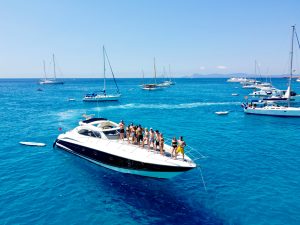
Your experience doesn’t end when you return to shore. A few last thoughts:
- Evaluate your experience: Did you get what was promised? Good value for money? Was the service as expected?
- Leave a review: Future guests benefit from your feedback—and good providers appreciate it.
- Provide constructive feedback: If something could’ve been better (e.g., timing, snacks, music), let the operator know – they may adjust for future guests.
- Save contact info: If you’ll be back to Tulum, establishing a relationship with a good boat rental company can mean perks or better availability next time.
Why Booking a Boat in Tulum Is Worth It
To wrap up: what makes renting a boat in Tulum a standout decision?
- The waters around Tulum are clear, calm (depending on season) and rich with marine life, making them ideal for snorkeling and exploration.
- The flexibility: you’re not confined to beaches or resorts – you can explore hidden spots, reefs, sandbars, cenotes or remote stretches of coastline.
- The privacy and luxury: A private boat means your group, your schedule, your vibe. Especially appealing for celebrations or special trips.
- The value: When done right, a boat rental is a premium experience but comparable in cost to high-end land excursions – and often more memorable.
Ready to Book Your Boat in Tulum?
At Tulum Boat Rentals, we provide a wide range of charter options, from 33 ft yachts to 72 ft luxury power yachts, suitable for couples, families, and groups.
All of our packages are designed to be hassle-free and include professional crew, snorkel gear, and optional food and open-bar upgrades.
We handle everything for you, so you can focus on enjoying the day on the water!
Top 7 Marine Wildlife You Might Spot on a Tulum Boat Tour
Top 7 Marine Wildlife You Might Spot on a Tulum Boat Tour
When you board a boat tour in Tulum, the Caribbean waters open up a window to a rich underwater world.
Whether you’re on a daytime snorkeling ride, a full-day marine excursion, or a Sian Ka’an biosphere boat trip, you’ll have a chance to see an impressive variety of marine species.
Below are the most common (and some rarer) marine species you may encounter on a Tulum boat adventure.
1. Sea Turtles (Green, Hawksbill, Loggerhead)
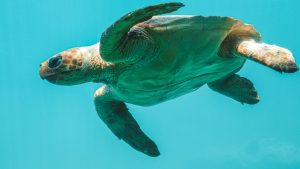
Sea turtles are among the most beloved marine animals seen around Tulum. Several species frequent the region’s coral reefs and coastal zones.
- Green turtle (Chelonia mydas): Common in Caribbean reef areas, they often graze on seagrass or algae.
- Hawksbill turtle (Eretmochelys imbricata): Distinguished by its narrow head and patterned shell. Tulum’s reefs and beaches serve as nesting or foraging grounds.
- Loggerhead turtle (Caretta caretta): Less frequent but possible, often encountered near reef edges or when nesting.
What to watch for:
- Slow, deliberate movements near the surface for breathing.
- Occasionally turtles rest underwater, near reef ledges or inside shallow coral outcrops.
- In nesting season (usually May to October), female turtles may come ashore at night.
2. Rays and Skates (Spotted Eagle Ray, Manta & Other Rays)
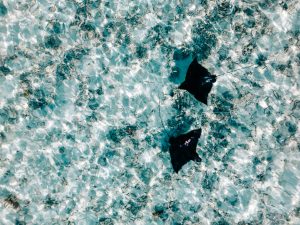
Rays add dramatic flair to marine sightings thanks to their graceful swimming.
- Spotted Eagle Ray (Aetobatus narinari): Among the signature ray species around Tulum and the Riviera Maya, with its spotted dorsal pattern and wing-like pectoral fins.
- Manta rays / devil rays: Though less common in nearshore reefs, larger rays can appear in deeper or transitional waters.
- Other smaller rays or skate species: Gliding close to sandy bottoms or between reef crevices.
What to watch for:
- Rays often swim just above the substrate or gliding over sandy seafloor patches.
- Look for undulating wings when they swim, especially near drop-off zones or reef terraces.
3. Reef Fish and Colorful Tropical Species
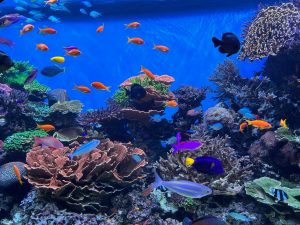
While not always the main draw, reef fish are almost guaranteed to brighten up your underwater view. The diversity is rich.
Some species to look for:
- Rainbow Parrotfish: Large, vibrantly colored fish that feed on algae and help maintain reef surfaces.
- Queen Triggerfish (Balistes vetula): Distinct colors and bold attitude, often near coral reef structures.
- Juvenile Spotted Drum (Equetus punctatus): Seen under ledges or in reef cracks.
- Colorful angelfish, butterflyfish, damselfish, wrasses, tangs, and parrotfish species are all part of the tapestry.
What to watch for:
- Move slowly and quietly; fish may dart away at sudden motion.
- Coral gardens, reef walls and edges are hotspots.
- Use polarized sunglasses above water to better see shadows or shapes beneath surface.
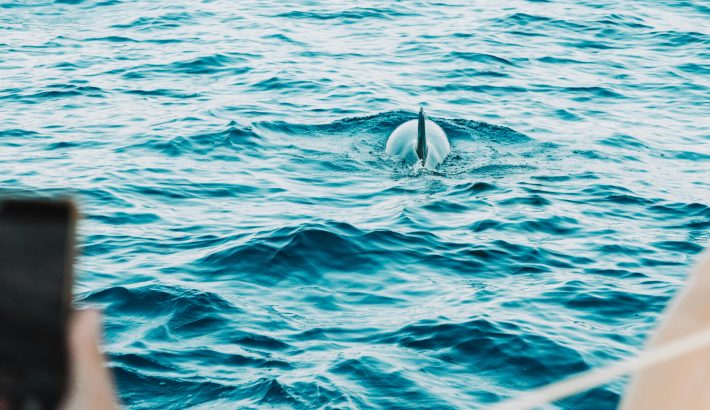
4. Dolphins (Bottlenose, Spinner)
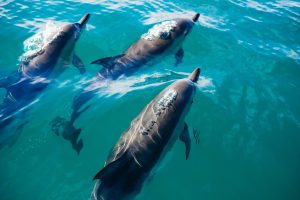
Dolphins are social, fast-moving, and exciting to spot on marine excursions. Tulum boat tours bound for the open sea or the Sian Ka’an reserve may cross paths with dolphin pods.
- Bottlenose dolphins: Among the more commonly encountered dolphin species in the region.
- Spinner dolphins: Known for acrobatic spinning leaps; occasionally seen in deeper passages.
What to watch for:
- Look for “blow” (a spray of air) just above the surface.
- Observe the water surface for ripples or dorsal fins slicing the surface.
- Dolphins often ride the bow wave of a boat—if you see splashing near the hull, they may be playing.
5. Sharks (Nurse, Reef, Occasional Whale Shark)
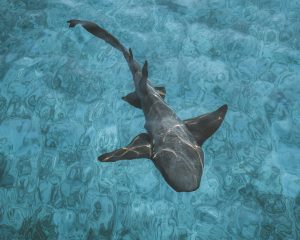
Yes, with careful tourism practices, sharks are part of the ecology here. Encounters are rare but possible.
- Nurse sharks: Generally docile, they rest on sandy bottoms in shallower zones.
- Reef sharks: In deeper reef corridors, small reef sharks may patrol.
- Whale sharks (Rhincodon typus): Occasionally seen in offshore waters especially during seasonal plankton blooms (e.g. May–September).
What to watch for:
- Sharks don’t always surface; crouched near reef crests or drop-offs.
- Look for fins or silhouettes beneath the water.
- Avoid sudden maneuvers; stay calm and follow guide instructions.
6. Manatees and Aquatic Mammals
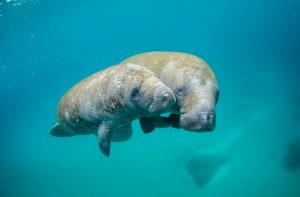
While rarer in open seawater, manatees can sometimes be spotted in mixed lagoon-mangrove zones associated with the Sian Ka’an biosphere reserve.
- West Indian manatee (Trichechus manatus): Herbivorous, slow-moving mammals that browse seagrass or vegetation near coastlines and estuaries.
- In Sian Ka’an excursions, manatee sightings are part of the wildlife spectacle.
What to watch for:
- Gentle surfacing, slow head breaks above water to breathe.
- Calm lagoon zones or mangrove channels increase chances of sighting.
7. Birds and Sea-surface Life (Bonus Wildlife)
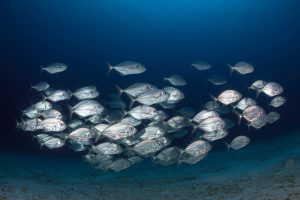
While the focus is marine life, boat tours often include sightings of sea-surface species or seabirds:
- Herons, egrets, pelicans, frigatebirds, terns: In mangroves, shorelines, or overhead.
- Flying fish or baitfish schools: You may observe fish jumping or flickering schools beneath the surface.
- Surface jellyfish or plankton blooms: Occasionally visible in clear water patches.
Tips to Maximize Your Wildlife Experience
-
Go with experienced, ethical operators
Select a boat tour operator experienced in marine wildlife etiquette. They’ll know how to approach animals without causing stress or danger. -
Time of day matters
Early morning or late afternoon often yield calmer seas and more active wildlife. -
Be still and observant
Move slowly, minimize noise, and watch quietly. Wildlife is easily spooked. -
Bring good optics & underwater gear
Binoculars above water, a mask/snorkel, and ideally a camera with underwater housing will enhance your viewing. -
Understand local ecosystems
Knowing where coral reefs, drop-offs, mangroves, and lagoon passages lie helps position the boat in the right zones. -
Respect wildlife guidelines
Don’t touch or chase animals, maintain distance, and follow your guide’s instructions.
Example Wildlife Tour: Sian Ka’an Biosphere Reserve
One of the top boat tours for combining marine and terrestrial wildlife is the Sian Ka’an Biosphere Reserve tour.
- Route often includes Boca Paila where mangroves meet the sea – prime habitat for crocodiles and manatees.
- Dolphins and sea turtles are frequently spotted in coastal channels.
- Snorkeling over reef sections may reveal reef fish, rays, and turtles.
- Bird species are abundant – over 300 recorded species in the reserve.
In a full day Sian Ka’an boat tour with lunch, it’s not uncommon for participants to report sightings of crocodiles, dolphins, turtles, and manatees.
Why These Species Appear Around Tulum
- Coral reef systems: The reefs along the Riviera Maya support a high diversity of reef fish, rays, and turtle foraging grounds.
- Mangrove lagoons and estuaries: Provide habitat for crocodiles, manatees, juvenile fish, and reptiles.
- Migratory and seasonal behaviors: Whale sharks, seasonal turtle nesting, and changing plankton blooms can introduce occasional visitors.
- Protected areas (Sian Ka’an, reef zones): These zones limit destructive development and help maintain healthy populations of marine life.
Sample Itinerary: What You Might See on a Boat Tour
| Tour Phase | Typical Habitat | Possible Wildlife Sightings |
|---|---|---|
| Depart coastline | Shallow reefs, lagoon mouths | Sea turtles, reef fish, rays |
| Open sea / offshore | Drop-offs, current ledges | Dolphins, passing sharks, schools of fish |
| Mangrove channels | Brackish water, roots, lagoon edges | Crocodiles, manatees, birds, juvenile fish |
| Snorkel section | Coral reef patches | Colorful reef fish, rays, turtles |
| Return leg | Mixed zones | Dolphins riding bow, surface activity |
Common Challenges & How to Overcome Them
- Visibility limitations: Try booking in calm sea days; avoid tours during storms or windy days.
- Shy or distant animals: Use zoom lenses or binoculars. Let animals come closer rather than approaching them.
- Crowded tours: Choose smaller-group or private tours to reduce disturbance and increase chance of close encounters.
- Wrong season timing: Some species are seasonal (e.g. whale sharks, nesting turtles). Check the calendar.
- Tourist impact: Select operators committed to conservation and minimal environmental impact.
Suggested Wildlife Tours & Zones
- Tulum coastal reef snorkeling / reef catamaran tours — good for turtles, rays, reef fish.
- Sian Ka’an biosphere boat tours — best for combining marine + mangrove wildlife (crocodiles, manatees, dolphins).
- Full-day tours with snorkeling + marine life search — capture more variety across habitats.
Plan Your Wildlife-Rich Boat Adventure with Tulum Boat Rentals
Embark on a marine wildlife adventure with Tulum Boat Rentals.
Whether you’re aiming to snorkel near coral reefs, explore mangrove channels in the Sian Ka’an reserve, or seek out dolphins and sea turtles, our experienced captains and eco-friendly approach ensure both thrilling encounters and minimal impact.
Why choose Tulum Boat Rentals?
- Locally guided tours by captains with deep wildlife knowledge
- Small group sizes to reduce disturbance
- Realistic expectations and safe wildlife viewing guidelines
- Flexible tours tailored to your interests – reef, mangrove, marine migration
Book your ideal marine wildlife excursion today at tulumboatrentals.com and discover the underwater wonders that await just off Tulum’s coast.

Best Instagram-Worthy Spots to Visit on a Tulum Yacht
Best Instagram-Worthy Spots to Visit on a Tulum Yacht
Exploring Tulum by yacht is one of the best ways to discover the region’s most Instagram-worthy spots.
The combination of turquoise waters, white-sand beaches, and historic landmarks creates endless opportunities for photos. A
Tulum yacht experience not only takes you to hidden coves and lively reefs but also gives you front-row views of some of the most iconic sights along Mexico’s Caribbean coast.
Each location highlights a different side of Tulum’s beauty, making your yacht trip both memorable and camera-ready.
1. Tulum Ruins – An Instagram-Worthy Stop on Your Yacht Tour

The ruins are one of the most iconic sights in the region, but most visitors only see them from land.
Approaching them from the water, with stone temples perched above cliffs and framed by turquoise waves, gives a dramatic backdrop that’s far less crowded.
Early morning or late afternoon light makes the stone glow, and from the yacht deck you can capture the entire coastline in one shot.
2. Playa Santa Fe and the White Sand Coastline
A yacht makes it easy to stop along stretches of beach that are less accessible on foot. Playa Santa Fe is one of the most photogenic, with soft sand and swaying palms.
From offshore you get the full sweep of beach against jungle, while onshore you can step off for close-up shots.
Bright colors (towels, swimwear, or even just a pair of sunglasses) stand out beautifully against the pale sand and bright water.
3. Snorkeling at the Reefs

Tulum’s reef system is part of the Mesoamerican Barrier Reef, the second largest in the world.
Snorkeling stops give you both underwater shots of fish and coral and above-water photos of the yacht floating in calm, clear seas.
Even a waterproof phone case is enough to capture vivid colors below the surface. Snorkeling with turtles or rays adds a natural highlight to your yacht album.
4. Sian Ka’an Biosphere Reserve
Sailing into Sian Ka’an feels like entering another world. The reserve is a protected area of mangroves, lagoons, and quiet channels, far from the busier parts of Tulum.
Reflections in the still water create mirror-like images, while wildlife sightings (birds, dolphins, even manatees) add movement to your shots. Because it’s less developed, the reserve also offers unspoiled landscapes that stand out against the more built-up parts of the coast.
5. In’Ha Bay and La Bocana
These sheltered bays are popular for anchoring and swimming. Calm water makes reflections sharp and colors pop, especially when the sun is high.
Many yacht groups spend a few hours here, lounging on deck, snorkeling, or floating on paddleboards. It’s one of the easiest places to capture relaxed, lifestyle-style photos, whether it’s lunch on deck or simply drifting in the shallows.
6. Sunset on the Water

Tulum’s sunsets are best appreciated from the sea. As the sun dips below the horizon, the sky shifts through shades of orange, pink, and purple.
The silhouettes of palm trees or cliffs in the background create striking contrasts, and reflections on the water double the effect. Plan to be on the water during golden hour and you’ll walk away with some of the most dramatic photos of the day.
7. Hidden Beaches and Rocky Cliffs
Beyond the main beaches are secluded coves and rugged rock formations that aren’t easy to reach without a boat. These spots are less crowded, giving you a chance to shoot natural landscapes without people in the background.
Cliffs, caves, and overhangs add texture, and even simple wide shots of the coastline become striking when framed by a yacht deck or sail.
8. Tulum’s Beachfront from Offshore
Photographing Tulum’s shoreline from a yacht gives a different perspective on the beach clubs, hotels, and colorful buildings.
Dusk is the best time, when lights start to glow along the shore. Wide shots capture the energy of Tulum’s social scene, while close-ups of the deck with the coastline behind you balance lifestyle and scenery.
9.Wildlife Encounters

One of the most exciting parts of being on a yacht is the possibility of spotting dolphins, rays, or sea turtles.
These encounters are spontaneous, which makes capturing them especially rewarding. Whether it’s a turtle surfacing alongside the boat or dolphins riding the wake, wildlife shots add authenticity to your Tulum gallery.
Planning & Logistics Tips for Yacht Photo Tours
To make sure your Instagram shots come out well, keep these in mind:
- Time of day: Early morning light or late afternoon/golden hour is best. Midday can be harsh unless you want strong color contrast.
- Weather conditions: Clear skies or partly cloudy days help. Too much cloud flattens colors; rain or overcast kills vibrancy.
- Equipment: Waterproof case, wide-angle lens, drone if permitted, polarized filter, extra batteries.
- Dress & props: Bright colors contrast well with sea and sand. Natural textures (wood, straw, linen) work well. Props like floats, towels, snorkeling gear help.
- Privacy & permits: Some wildlife reserves or protected areas have restrictions. Respect local regulations. Avoid trespassing.
- Crew & safety: Choose yacht/boat rentals with experienced crew. Safety gear is essential. The smoother the yacht ride, the better the photo results.
Sample Itinerary for an Instagram-Focused Yacht Day
Here is a suggested 6- to 8-hour yacht schedule designed to hit many of the spots above, maximize light, and give you photo variety:
| Time | Activity |
|---|---|
| 7:30-8:30 AM | Depart from yacht dock, cruise along the coast, sunrise shots near Tulum ruins from sea |
| 9:00-10:30 AM | Snorkel at reef / coral zone; underwater and over-water photos |
| 11:00-12:30 PM | Visit a cenote (if accessible by boat or via a short land transfer) for cave / reflection shots |
| 12:30-1:30 PM | Lunch onboard or at a beach club reachable from water |
| 1:30-3:00 PM | Cruise through In’Ha Bay / La Bocana or Sian Ka’an channels for calm water shots |
| 3:30-5:30 PM | Relax at hidden beach; swim; enjoy golden hour along cliffs or open water |
| 5:30-6:30 PM | Sunset cruise, silhouette shots, lights from shore, final horizon photos |
Choosing a Yacht Rental
Using a yacht/boat rental (such as those offered by Tulum Boat Rentals) gives you flexibility, privacy, and access to spots many visitors can’t reach.
Controlled schedule, ability to anchor where light and scenery are best, space to set up gear, and a crew that knows local water conditions all make a difference. Yacht travel in Tulum amplifies what you can see and capture.
Ready to Capture Your Own Tulum Yacht Moments?
Turn your Instagram feed into a highlight reel of turquoise waters, hidden beaches, and unforgettable sunsets.
Book your private yacht today with Tulum Boat Rentals and experience the best of Tulum from the sea.

Best Whale Shark Spots Near Tulum Accessible by Boat
Best Whale Shark Spots Near Tulum Accessible by Boat
Tulum is a top destination for marine life enthusiasts, and exploring whale shark spots near Tulum accessible by boat is a must-do experience.
Every summer, these gentle giants migrate to the waters off the Yucatán coast, offering travelers a rare opportunity to swim alongside them in their natural habitat.
Planning your boat trip carefully ensures a safe and unforgettable adventure.
Whale Shark Behavior and Migration Near Tulum
Whale sharks are the largest fish in the ocean and are known for their gentle, filter-feeding nature. Their distinctive patterns of white spots and stripes make each individual unique, and they pose no threat to humans.
Each year, from June to September, the waters near Tulum become a feeding ground for whale sharks, thanks to the seasonal plankton blooms.
This natural event attracts large numbers of these animals, making it one of the best times to plan a snorkeling adventure. Understanding their migration patterns is helpful for planning your trip, as it increases your chances of encountering them in the wild.
Top Whale Shark Spots Near Tulum Accessible by Boat
Here are the most popular spots to see whale sharks near Tulum, all accessible by boat.
Each location has its own charm, marine life, and activities, making them worth exploring.
1. Isla Mujeres

Isla Mujeres is a small island known for its clear waters and abundant marine life. Its proximity to the Yucatán coast makes it one of the most popular destinations for whale shark tours.
- Distance from Tulum: Approximately 2.5 to 3 hours by boat
- Best Time to Visit: June to September
- Activities: Snorkeling with whale sharks, beach exploration, and enjoying local cuisine
The waters around Isla Mujeres are nutrient-rich, making it a prime feeding ground for whale sharks.
Boat tours from Tulum provide all the necessary equipment and guidance for a safe, memorable experience. The island itself offers opportunities to relax on beaches and experience local culture between snorkeling excursions.
2. Isla Holbox

Isla Holbox is a more remote island north of Tulum that is famous for its tranquil beaches and natural beauty. It has become a sought-after location for spotting whale sharks due to its less crowded waters.
- Distance from Tulum: Approximately 3 to 4 hours by boat
- Best Time to Visit: June to September
- Activities: Swimming with whale sharks, exploring the island, and tasting local seafood
Trips to Isla Holbox often include stops to enjoy the island’s unique charm, including its quiet beaches and shallow lagoons.
The area is perfect for eco-friendly tours, where travelers can witness whale sharks without disturbing their natural behavior. The island’s slower pace makes it an ideal spot for combining adventure with relaxation.
3. Contoy Island

Contoy Island is a protected national park located between Isla Mujeres and Isla Holbox. It is known for its rich biodiversity and pristine environment, offering a different type of whale shark experience.
- Distance from Tulum: Approximately 2.5 to 3 hours by boat
- Best Time to Visit: June to September
- Activities: Snorkeling with whale sharks, bird watching, and exploring untouched beaches
Because Contoy Island is protected, access is limited, making visits feel exclusive and natural.
Seeing whale sharks here is an immersive experience that combines marine life observation with the island’s untouched landscapes. Visitors are encouraged to follow guidelines to minimize impact on the environment and preserve its natural beauty.
How to Plan a Whale Shark Adventure Near Tulum
Intro: A successful whale shark trip requires some preparation. Planning ahead ensures a safe, enjoyable, and eco-friendly experience.
- Choose a Reputable Tour Operator: Make sure the operator is experienced, follows safety guidelines, and prioritizes responsible wildlife practices.
- Book in Advance: Whale shark tours are very popular, so reserving your spot early is recommended.
- Prepare for the Day: Bring swimwear, sunscreen, a hat, a waterproof camera, and a towel.
- Respect Marine Life: Follow all instructions from guides and avoid touching or disturbing the whale sharks.
By following these simple tips, your encounter with whale sharks will be both memorable and responsible.
Book Your Whale Shark Tour with Tulum Boat Rentals
For a seamless whale shark adventure, book your tour with Tulum Boat Rentals. They offer private charters and experienced captains to ensure a safe, comfortable, and personalized experience.
Whether you want a small boat for a family outing or a larger charter for a group, Tulum Boat Rentals provides everything you need to enjoy the marine wonders near Tulum.